Yesterday’s Standard of Care Does Not Meet Today’s Glaucoma Reality
For decades, glaucoma treatment has followed a familiar stepwise path: start with topical drops, monitor for change, add more medications as needed, and escalate only after evidence of progression.
The blind truth: A drop-dependent approach depends on 2 things that are difficult to guarantee in real life: consistent daily adherence by patients and frequent visual field monitoring. Gaps in both can leave physicians managing glaucoma after vision has already been affected.
Transform your glaucoma management today! Adopt the consensus protocol.
Historical Glaucoma Care is Reactive, Limited, and High-Risk1,2
Visual Field Gaps Reveal the Limits of Drop-Dependent Glaucoma Care
-
12.1%
of patients on drops are receiving the AAO-recommended frequency of visual field testing.3
-
42.3%
of patients on drops receive zero visual field tests over an 18–36-month time period.3
More Medications Are Not the Answer
Historically, when glaucoma progressed, the next step was often to add another drop. Additional topical medications provide only 9-13% further reduction in intraocular pressure (IOP) following treatment with the first drop.4
Impact of Multiple Glaucoma Medications on Dry Eye Disease
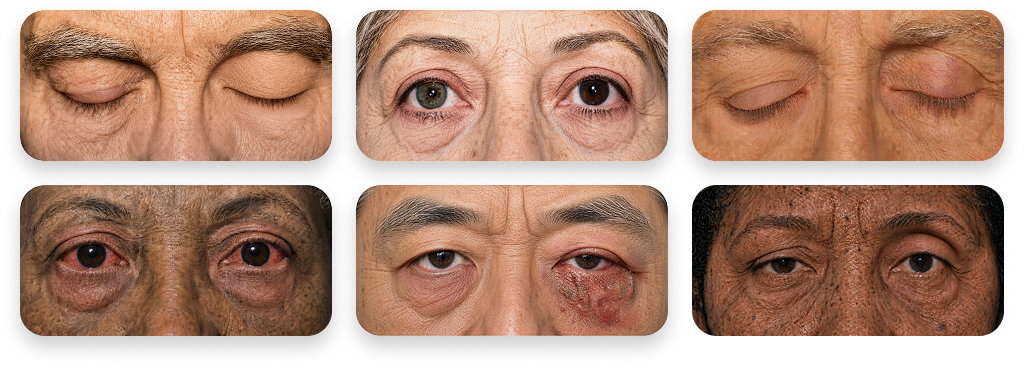
Multiple medications can contribute to Dry Eye Disease (DED), a common reason patients discontinue their Glaucoma treatment or struggle with adherence. DED symptoms were a predictor of noncompliance in a study of patients with glaucoma.
For Those Patients Who Do Comply, Are Drops Really Benign?
Drop Therapy May Also Leave Patients Vulnerable to IOP Fluctuation
Nocturnal IOP variability and IOP fluctuation can create additional risk, particularly when pressure is not adequately controlled throughout the full 24-hour cycle. Greater IOP variability has been associated with glaucoma progression and visual field loss.7